
Category: A Practical Guide to Choosing and Enjoying a Bed-and-Breakfast Stay

  • Bed-and-Breakfast, Boutique Hotel, or Vacation Rental? How to Choose the Right Stay

    Bed-and-Breakfast, Boutique Hotel, or Vacation Rental? How to Choose the Right Stay

    Choosing a place to stay shapes much more than where you sleep. It affects the rhythm of the morning, how easily everyone can gather, how much privacy you have, and whether the trip feels hosted, independent, or somewhere in between. Bed-and-breakfasts, boutique hotels, and vacation rentals can all suit a relaxing getaway, but they ask different things of the traveler.

    Supporting editorial scene for Bed-and-Breakfast, Boutique Hotel, or Vacation Rental? How to Choose the Right Stay
    Bed-and-Breakfast, Boutique Hotel, or Vacation Rental? How to Choose the Right Stay: supporting editorial illustration.

    The useful question is not which category is universally better. It is which setting supports the kind of time you want to have.

    Defining the Alternatives

    A bed-and-breakfast is generally a small-scale lodging experience centered on guest rooms and a more personal stay. The name suggests breakfast, but travelers should not assume that every property handles meals, shared spaces, check-in, or guest interaction in the same way. One B&B may feel quiet and home-like; another may have a more formal inn atmosphere. The appeal often lies in choosing a stay with character rather than a standardized setup.

    A boutique hotel is a hotel-style property that typically emphasizes a distinct design, mood, or identity. It may offer the conveniences travelers associate with a hotel, such as a staffed arrival process or on-site services, while feeling less uniform than a large conventional hotel. “Boutique” is not a universal guarantee of size, luxury level, or amenities, so the label is best treated as a starting point rather than a complete description.

    A vacation rental is a privately used accommodation, often offering an entire home, apartment, cottage, or similar space. Its central advantage is usually control over the setting: guests may have separate rooms, a living area, and space for meals or downtime. At the same time, the degree of host involvement, assistance, and service can vary substantially from one rental to another.

    Meaningful Differences: How You Want the Trip to Feel

    Hosted warmth versus independent space

    For travelers drawn to conversation, local character, and a sense of being welcomed into a particular place, a bed-and-breakfast can be an appealing fit. Shared spaces may create opportunities to slow down and meet fellow guests, while the smaller scale can make the stay feel more personal. That same closeness may not suit someone who prefers to arrive, settle in, and keep the trip entirely private.

    A boutique hotel often sits between personal character and hotel independence. It can work well for travelers who want a designed, distinctive atmosphere but also appreciate a clearer separation between guest space and staff space. If your ideal getaway includes coming and going on your own schedule while retaining the familiarity of hotel operations, this category may feel comfortable.

    Vacation rentals generally favor groups, families, longer stays, or travelers who want a private base. A separate living room can make rainy afternoons easier; a kitchen or dining area can change how meals fit into the day. But greater independence also means that the experience may feel less immediately supported when a question or problem arises.

    Room for people, routines, and belongings

    Think beyond the number of beds. Consider how your group actually spends time. Two travelers on a short, restful escape may be perfectly happy in one well-appointed room. A group with different sleep schedules, children, work calls, or a desire to cook may value doors that close, more than one bathroom, and a common area.

    This is where a vacation rental can be particularly practical, because it may allow the trip to function more like everyday life in a different setting. A boutique hotel may be a better match when each traveler wants a separate room but the group does not need a shared household space. A B&B can suit travelers who expect to spend most of the day exploring and want their lodging to be a comfortable, intimate retreat rather than the center of the itinerary.

    Predictability versus individuality

    A hotel-style stay can make it easier to anticipate the basic flow of arrival, departure, and getting help. Boutique hotels may offer a more individual setting without giving up that familiar structure. Bed-and-breakfasts and vacation rentals can be richly distinctive, but their individual policies matter more because there is less reason to assume one property resembles another.

    That is not a flaw; it is part of the choice. Travelers seeking a memorable setting may welcome the variation. Travelers who need a tightly predictable routine may prefer an option with clearly stated procedures and services.

    Practical Tradeoffs to Compare Before You Commit

    Look at the complete cost, not the headline rate

    The nightly figure rarely tells the whole story. Compare the total amount for the full stay, including mandatory charges that can be calculated in advance, and review the final payment amount before paying. This creates a fairer comparison between a room rate that appears simple and a rental price that may be presented with separate required charges.

    Also consider what is included in a way that matters to your plans. If breakfast is offered at a B&B, it may simplify mornings. If a rental has space for meals, that may change your food budget and routine. If neither matters to you, those features should not drive the decision. The point is to compare the overall trip arrangement rather than treating one line item as the entire cost.

    Match accessibility needs to specific features

    Accessibility cannot be judged reliably from broad labels such as “accessible,” “historic,” or “ground floor.” A traveler may need information about the route into the property, entrance conditions, room layout, bathroom features, parking, or whether key spaces can be reached without barriers. Covered lodging reservation services are expected to describe accessible features with enough detail for travelers to decide whether the accommodation meets their own needs.

    Ask for the details that affect your stay rather than assuming that one feature answers every question. This is especially important in distinctive older buildings, multi-level properties, and rentals, where layouts can differ widely. A clear description helps you choose a setting that works in practice, not just in theory.

    Consider where help comes from when plans change

    Every stay can involve a late arrival, a maintenance issue, a misplaced key, or a mismatch between expectations and reality. Before choosing, look for clarity about who handles problems and how guests receive assistance. A boutique hotel may have an established staff structure. A B&B may offer direct communication with the people responsible for the property. A vacation rental may rely on a host, manager, or remote support arrangement.

    No model guarantees a trouble-free trip. What matters is whether you understand the path to assistance. If an issue arises at a hotel or motel, begin by raising it with the front desk, manager, or customer service. A calm, specific explanation of the problem and the outcome you need often gives the property the best opportunity to address it.

    Protect yourself from misleading listings

    A beautiful listing is not, by itself, proof that the lodging is genuine or available. Fake rental and travel listings may copy real information or present entirely invented accommodations. Before sending money, make sure the listing, payment process, and party receiving payment make sense for the stay you are arranging. Be especially cautious when pressure, unusual payment requests, or a deal that seems disconnected from the rest of the market pushes you to act quickly.

    This caution applies most visibly to vacation rentals, but it is sensible whenever lodging is arranged online. A legitimate stay should leave you with a clear understanding of what you are paying for, who is responsible for the accommodation, and what happens before arrival.

    Making the Decision

    Choose a bed-and-breakfast when the lodging itself is part of the getaway: you value a smaller-scale setting, personal atmosphere, and the possibility of a more hosted experience. It is often a natural choice for travelers who want to trade anonymity for character and do not need a large private living area.

    Choose a boutique hotel when you want a distinctive environment alongside the familiar structure of a hotel stay. It can suit a couple, solo traveler, or friends traveling together who want convenience and a sense of place but prefer their own rooms and a more self-contained routine.

    Choose a vacation rental when privacy, shared space, and household flexibility matter most. It can be especially useful when the group wants to spend meaningful time together at the accommodation or needs a layout that supports different routines. Be prepared to pay close attention to the listing’s exact setup, fees, rules, and support arrangements.

    A simple way to decide is to name your top two priorities before comparing properties. If they are privacy and space, begin with rentals. If they are character and a hosted feel, begin with B&Bs. If they are a distinctive setting and hotel-style convenience, begin with boutique hotels. Then let the individual property’s details—not the category alone—settle the choice.

    Whichever type you choose, confirm the specific property’s total price, accessibility details, arrangements, and policies before payment. The right stay is the one whose space, level of independence, and practical setup let the trip unfold the way you hoped it would.

    Information may contain errors, omissions, or outdated details. Confirm time-sensitive information with the relevant official or authoritative source.

  • What to Expect on Your First Bed-and-Breakfast Stay

    What to Expect on Your First Bed-and-Breakfast Stay

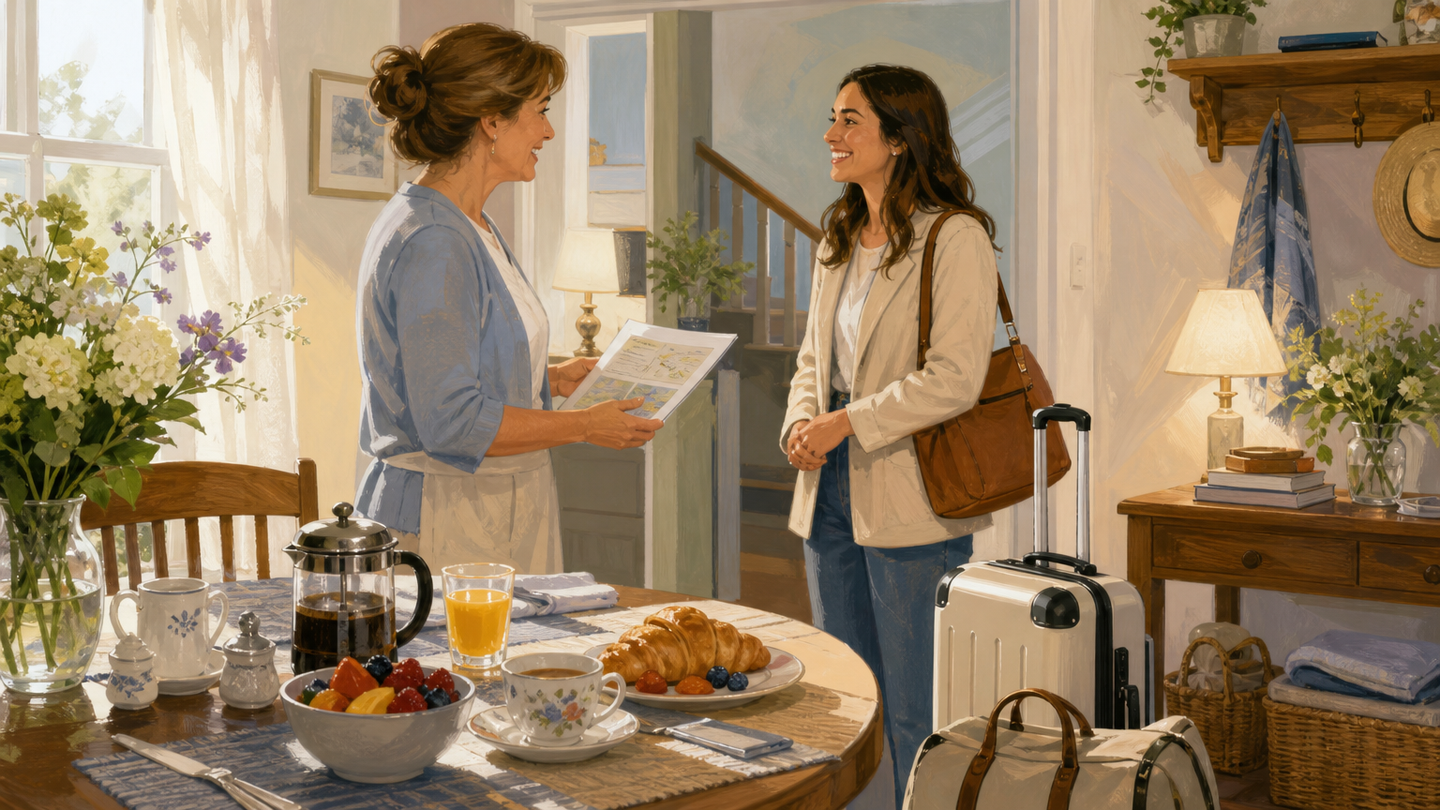
    A first bed-and-breakfast stay can feel less predictable than choosing a large hotel—and that is often part of its appeal. Rather than assuming every property follows the same routine, approach the experience as a stay with its own character, house rules, and level of service. A little preparation helps you choose a place that suits your trip and arrive ready to relax.

    Supporting editorial scene for What to Expect on Your First Bed-and-Breakfast Stay
    What to Expect on Your First Bed-and-Breakfast Stay: supporting editorial illustration.

    Before the first experience

    The name “bed-and-breakfast” does not promise one identical experience everywhere. Breakfast may be central to the stay, but the details can differ: it may be included, offered at a particular time, require advance notice, or be handled differently on different days. Rooms, shared spaces, arrival procedures, and the degree of interaction with hosts can also vary. Read the property description closely instead of filling in the blanks with expectations from another type of lodging.

    Begin with the practical shape of your trip. Think about when you expect to arrive, whether you will have a car, how much quiet or privacy you want, and what you need in order to sleep comfortably. If you are traveling with another person, talk through these preferences before choosing a room. A charming setting matters, but comfort often comes down to small details such as the bed arrangement, bathroom setup, stairs, noise expectations, and where you will keep your belongings.

    It is also wise to understand the cancellation, deposit, and payment terms before making a commitment. The total presented before payment should include mandatory charges that are known and calculable in advance, along with the final amount to be paid. If a total seems unclear, ask for a plain explanation of what is included and what is not. That is simpler than trying to sort out an unexpected charge after the stay.

    What to expect from a more personal stay

    A bed-and-breakfast can feel more individual than a standardized lodging experience. The atmosphere may be quiet and home-like, lively and social, formal, casual, historic, modern, or some combination of these. The important point is not to expect a universal script. One property may encourage lingering conversation over breakfast; another may provide a more independent experience. Neither approach is inherently better—it depends on what feels comfortable to you.

    Shared areas deserve a moment of thought. A sitting room, dining room, porch, garden, or hallway can make a stay feel welcoming, yet these spaces may also come with norms about hours, noise, food, visitors, or use. Treat common areas with the same consideration you would use in any shared setting: keep your belongings contained, observe posted guidance, and give other guests room to enjoy the space.

    Breakfast itself is best treated as a planned part of the stay rather than an automatic hotel buffet. Ask how it works if the information is not clear. Find out whether there is a serving window, whether seating is shared or separate, and whether dietary needs can be accommodated. If you have an allergy, a medically necessary diet, or a strong food restriction, raise it early and be specific. A property may be able to help, but it should not be assumed.

    Arrival can also be more structured than at a large, continuously staffed hotel. Confirm the check-in process, especially if your travel plans could change. Knowing where to go, how access works, and what to do if you arrive later than expected removes unnecessary stress from the first few minutes of the trip.

    Questions worth asking before you commit

    Good questions are not demanding; they help both traveler and host avoid mismatched expectations. Start with the basics:

    • What is included in the stated total price? – How does breakfast work, and can dietary needs be accommodated? – What are the arrival and departure procedures? – Is the bathroom private or shared? – Are there stairs or other features that may affect getting around the property? – What are the policies on parking, visitors, quiet hours, pets, smoking, and children, if any of those matter to your trip?

    Accessibility deserves direct, detailed questions rather than broad assumptions. Lodging reservation information should identify accessible features with enough detail for a traveler to judge whether the setting meets their own needs. If accessibility is important to you, ask about the particular features that affect your visit—for example, the route into the building, steps, room location, bathroom layout, or other practical needs. A general statement that a place is “accessible” may not tell you enough to plan confidently.

    You can also ask what type of experience the property is designed to offer, but keep the question concrete. Instead of asking whether it is “good,” ask whether breakfast is communal, whether there are quiet hours, whether rooms are near shared spaces, or whether guests generally need to navigate stairs. Specific answers are more useful than a vague promise of comfort.

    Starting with confidence

    Once you arrive, give yourself permission to settle in without trying to make the experience conform to an imagined version of a bed-and-breakfast. Read any welcome information, learn the routines that affect you, and communicate early if something important is missing or unclear. Most small problems are easiest to resolve while you are still at the property and while there is time to make the stay more comfortable.

    If a concern arises, start with the front desk, manager, host, or customer-service contact associated with the property. Explain the issue calmly, state what outcome would help, and allow an opportunity to address it. If the concern cannot be resolved that way, a state consumer-protection office may be a possible next avenue for a lodging complaint.

    The best first stay is not necessarily the most elaborate one. It is the one whose routine, setting, and practical details fit the kind of getaway you want. Before committing, verify the property’s current policies, total price, and any accessibility details directly with it. With clear expectations in place, you can spend less energy decoding the experience and more time enjoying the change of pace.

    Information may contain errors, omissions, or outdated details. Confirm time-sensitive information with the relevant official or authoritative source.

  • How to Choose and Enjoy a Bed-and-Breakfast Stay

    How to Choose and Enjoy a Bed-and-Breakfast Stay

    A bed-and-breakfast stay can make a getaway feel more personal, restful, and connected to its setting than a standard overnight stop. The appeal is often in the smaller scale: a distinctive room, a shared breakfast tradition, and a host-led atmosphere that may encourage guests to slow down. Yet no two properties operate alike. The best experience comes from choosing a stay that suits your habits and from understanding the practical details before you arrive.

    Supporting editorial scene for How to Choose and Enjoy a Bed-and-Breakfast Stay
    How to Choose and Enjoy a Bed-and-Breakfast Stay: supporting editorial illustration.

    Understand What You’re Choosing

    “Bed-and-breakfast” is a useful description, not a promise of one identical format. One property may feel quiet and private, while another may have a more social rhythm. Breakfast may be central to the experience, but the serving style, timing, menu, and seating arrangements can vary. Rooms, common areas, parking, entry procedures, and guest interaction can vary just as much.

    That variety is part of the charm. Rather than assuming a familiar lodging routine, think about the kind of stay you want. Are you looking for a peaceful base after full days out, a setting where breakfast is part of the occasion, or an overnight experience with more character than a conventional room? Naming your priorities makes the choices clearer.

    It also helps to distinguish essentials from preferences. Essentials are the conditions that can make or break the trip: sleeping arrangements, bathroom setup, mobility needs, dietary needs, transportation, and total cost. Preferences are the details that can improve the mood: décor, a particular view, a fireplace, a porch, or a more secluded setting. Start with essentials so that a beautiful listing does not distract from a poor fit.

    Choose for Fit, Not Just Appearance

    Begin with the daily rhythm you expect to keep. If you like to leave early, ask how that works with breakfast and checkout routines. If you value long, unhurried mornings, look for a stay whose breakfast style and shared-space atmosphere support that pace. Travelers who prefer privacy may be happier with clear information about private rooms, private bathrooms, entrances, and the extent of shared areas.

    Sleeping comfort deserves more attention than it often gets. Look for room descriptions that answer practical questions: What type of bed is provided? Is the bathroom private or shared? Is the room reached by stairs? Is there likely to be noise from common spaces or nearby rooms? Photographs can convey personality, but written details are usually better at revealing whether the room will work for your needs.

    Breakfast should be considered as both a pleasure and a logistical feature. If food restrictions or preferences matter, raise them before committing to the stay rather than assuming every request can be accommodated. Also consider whether a fixed breakfast period will complement your plans. A memorable meal is less enjoyable when it creates stress around an early departure or an activity that starts sooner than expected.

    Location should be evaluated in relation to the trip you actually want to take. A property can be appealing on its own and still be inconvenient for your itinerary. Think through arrival, parking, walking distances, and how you will get to the places that matter to you. For a restful getaway, a location that reduces unnecessary driving may be more valuable than a longer list of decorative features.

    Accessibility Calls for Specific Details

    Accessibility is not something to infer from broad labels or photographs. Travelers need descriptions detailed enough to decide independently whether a property meets their needs. If accessibility is important to you, focus on the full path of the stay: parking or drop-off, route to the entrance, steps or level changes, doorway access, room layout, bathroom features, and any spaces you expect to use.

    Ask direct, practical questions about the features that affect you. A general statement that a property is accessible may not tell you whether a particular room, entrance, or bathroom will work. Clear answers allow you to choose with confidence and avoid arriving to an unexpected barrier.

    Review the Practical Details Before Payment

    A good lodging decision includes the full cost, not merely the prominent nightly figure. For covered short-term lodging, including inns, the total price and mandatory charges that are known and calculable upfront should be disclosed before payment is requested. Read the final amount carefully and make sure you understand what is included, what is optional, and what conditions may affect the charge.

    Policies matter because bed-and-breakfast stays can have operating patterns that differ from larger lodging properties. Review cancellation terms, payment timing, arrival instructions, parking arrangements, breakfast expectations, and any policies that could affect your comfort. If a condition would change your decision, get clarity before you commit rather than treating it as a minor detail.

    Use the same care with the listing itself. Travel and rental scams can reuse real information or present entirely invented properties. Before sending money, make sure you are dealing with the genuine property or its legitimate reservation channel. Be particularly cautious when a request for payment feels rushed, when the method seems unusual, or when basic property details are difficult to confirm.

    Make the Most of the Stay

    Once you arrive, allow the property’s rhythm to work for you. A bed-and-breakfast is often best enjoyed as more than a place to sleep: leave room for breakfast, take advantage of comfortable shared areas if they appeal to you, and notice the details that give the stay its personality. At the same time, respect that other guests may be seeking quiet, privacy, or an early night.

    A little communication goes a long way. If you expect to arrive later than planned, have a dietary need, or are uncertain about how a feature of the property works, raise it promptly and politely. Clear communication helps hosts respond while there is still time to make the stay smoother.

    Small adjustments can protect the relaxing quality that drew you to the experience. Pack for the room and season rather than assuming every comfort will be provided. Keep your itinerary flexible enough to enjoy breakfast without rushing. If you are sharing common areas, be considerate with noise, personal belongings, and the time you occupy a space. These habits support an easygoing atmosphere for everyone.

    Address Problems Early and Calmly

    Even a carefully chosen stay can have a mismatch or problem. If something needs attention, bring it to the front desk, manager, or customer-service contact as soon as practical. Describe the issue plainly, explain what outcome would resolve it, and give the property an opportunity to respond. Early, respectful communication is usually more useful than waiting until departure, when options may be limited.

    If the issue remains unresolved, keep a clear record of the reservation details and your communications. A state consumer-protection office may be an avenue for further help with a lodging complaint. The goal is not to turn a minor disappointment into the center of the trip, but to handle meaningful problems in a clear and proportionate way.

    The right bed-and-breakfast stay is one that matches your real needs while leaving space for a little delight: a comfortable room, a breakfast routine that suits the day, and a setting that helps the getaway feel distinct. Confirm the property’s current details and policies directly before making payment.

    Information may contain errors, omissions, or outdated details. Confirm time-sensitive information with the relevant official or authoritative source.